Coco Chips – Premium Coconut Husk Growing Medium
Product Description
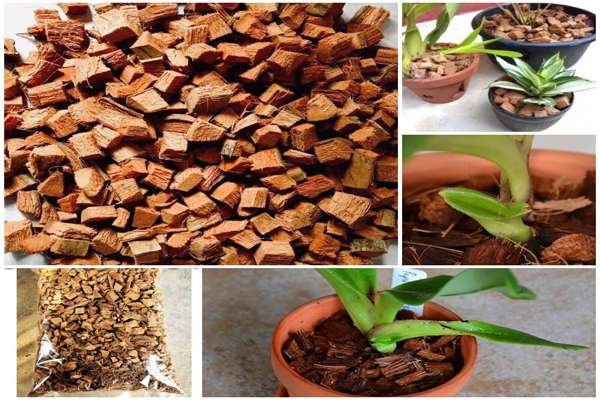
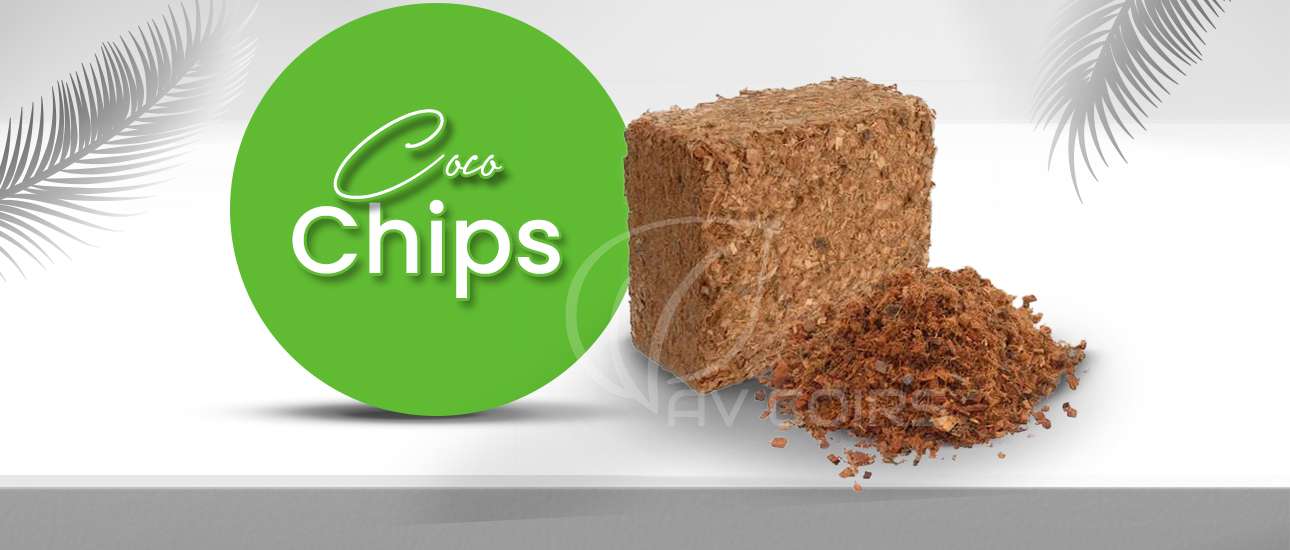
Coco chips are pieces of coconut husk that have been chipped and graded for use as a growing medium for orchids, anthuriums, aroids, and other general potting mixes. While bark is useful in the same way, it will not last many years before it becomes useless compost.
If you have ever grown orchids in bark, you will know how good it looks for six months before becoming a soggy layer that does not let roots breathe. Coco chips work a little differently; the fiber is dense and rich in lignin, so it will not compact for a much longer time.
What Are Coco Chips?
Coco chips are made from the dry shell of a coconut; this dry layer is located underneath the coconuts’ hard skin. At AV Coirs, the raw material is obtained from coconut-producing regions located near Pollachi and other areas of Coimbatore since those areas are famous for producing coir products.
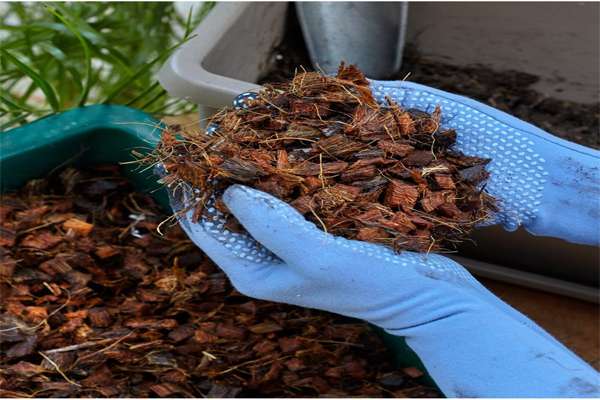
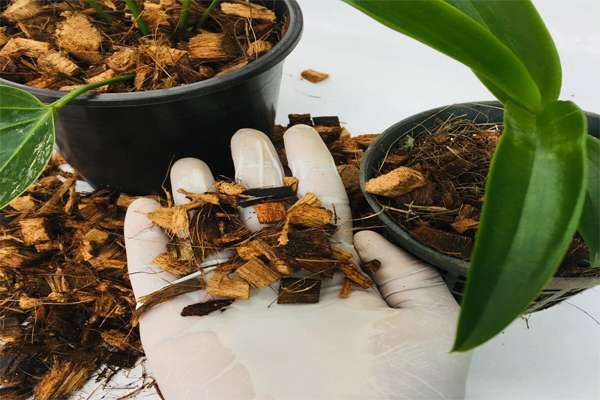
Instead of grinding the husks into fibers or making them into peat, AV Coirs breaks the husks into irregular pieces. This is the main difference between coco chips and other similar products: coco chips have their unique processes, allowing the product to have its airy texture and shape. That’s why people refer to the coco chips also as coconut husk chips, coco chunks, or coir chips—since there are various terms in regard to the same product.
Coco chips are widely used as a sustainable horticultural growing medium because they are renewable and biodegradable. According to the Food and Agriculture Organization, using renewable agricultural by-products helps support sustainable farming practices.
Coco Chips Manufacturing Process at AV Coirs
The process matters more than most buyers realize, because poorly processed coco chips carry high salt content that can burn roots.
- Husk collection and chipping — Fresh husks are chipped mechanically into pieces, then sorted.
- Size grading — Chips are sieved into grades, typically small, medium, and large, so buyers can match particle size to crop (fine grades for seedlings and smaller pots, coarse grades for mature orchid mounts). [VERIFY: exact grade sizes in mm used at AV Coirs]
- Washing and buffering — Raw husk naturally contains potassium and sodium salts, along with tannins. These are washed out over multiple cycles to bring electrical conductivity (EC) down to a safe range for root health. [VERIFY: EC/pH range achieved, e.g. “EC below 0.5 mS/cm, pH 5.5–6.5”]
- Drying — Chips are sun-dried or mechanically dried to bring moisture content down to a stable, shippable level.
- Packing — Compressed into bales or bags for bulk and export shipment.
Skip the washing and buffering step, and you get chips that look fine on delivery but scorch roots within weeks—this is the step most cheap suppliers cut corners on.
Key Benefits of Coco Chips
- Durable structure – The bulky and lignin-rich shell is capable of surviving for much longer than the bark does, which means that it must be repotted much less frequently.
- High CEC – Coco chips are able to retain nutrient ions and release them gradually to the roots, as opposed to the straight-through effect that live bark has.
- Balanced moisture and aeration – The irregular chip shapes create air pockets between chips, while the fiber still absorbs some moisture — similar to how coco peat manages water, just with more airflow.
- Lower fertilizer wastage – Due to the retention of nutrients, growers can expect a reduced need for fertilizing compared to before.
- Less transplant shock – The structure allows a better anchoring of roots, while the chips do not pack tightly around the root ball as soil does.
- Sustainability and biodegradability – Coco chips are a byproduct of coconut processing, rather than processed from natural resources.
Coco Chips vs Bark vs Cocopeat
Factor
Coco Chips
Pine Bark
Cocopeat
Longevity
2–3+ years before breakdown [VERIFY]
6–12 months before compacting
Long-lasting, but compacts if not aerated
Aeration
High — chunky, irregular shape
High initially, drops as it breaks down
Low on its own; needs perlite/chips mixed in
Water retention
Moderate–high, balanced
Low
Very high
Nutrient holding (CEC)
High
Low
Moderate
Best for
Orchids, anthuriums, aroids, mixed media
Orchids (short-term growers)
Seedlings, moisture-loving plants
Typical downside
Slightly higher upfront cost than bark
Breaks down fast, variable quality
Poor drainage/aeration alone
Best Uses for Coco Chips
Orchids and anthuriums. This is where coco chips are most established — epiphytic plants that need roots exposed to air but not left bone-dry.
Aroids (Monstera, Philodendron, and Anthurium species) benefit from the same open structure, often blended with perlite or bark for an even chunkier mix.
Hydroponics and semi-hydro setups. The inert, stable structure and high CEC make coco chips a reasonable substrate where you’re controlling nutrient delivery directly.
Mulching. Coarser grades work as a ground mulch, suppressing weeds while slowly breaking down.
Blended potting mixes. Many commercial growers don’t use coco chips alone — they cut it with cocopeat to balance the chips’ airiness against peat’s higher water retention. AV Coirs supplies both separately for growers who prefer to blend their own ratios, and the same chips work well as a base layer in our grow bags for commercial cultivation.
A valid drawback is that coco chips are not the best for seed starting or very delicate seedlings because they can’t make good contact between the seeds and the medium due to the size of the coconut chip. Finer cocopeat or blends that are suitable for seedlings would work better for this.
Why Choose AV Coirs
AV Coirs manufactures and exports coir products from Pollachi, located in Coimbatore District — a region known for decades as a hub for coconut industry and coir production. Learn more about us and our processing standards.
What buyers actually care about, beyond the marketing language:
- Consistent grading across batches, so a reorder matches what you got last time
- Washing and buffering built into the process, not sold as a separate premium option
- Bulk and export capability, with direct factory pricing rather than routing through a trading intermediary
- Direct communication with the manufacturer for custom grading or packaging requests
For distributors and importers, working directly with the processing facility also means shorter lead times on custom specifications compared to buying through a reseller.
Frequently Asked Questions
Coco chips serve the main purpose of a growing medium in places with orchids, anthuriums, and other aroids where the coarse structure provides aeration to the roots. They could also be used in hydroponics and as a coarse mulch.
Compared to bark, coco chips last longer before breaking down and have a higher cation exchange capacity (CEC). Even though bark is cheaper initially, many orchid growers switch to coco chips in order to minimize the need for repotting.
Well-processed coco chips typically hold their structure for a few years under normal growing conditions, considerably longer than pine bark, though exact lifespan depends on watering frequency and pot conditions.
Properly processed and buffered coco chips (like AV Coirs’ output) don’t require additional treatment. If you’re using an unbuffered or unwashed batch, soaking and rinsing beforehand is recommended to reduce salt content before potting.
Coco chips are chunky pieces of coconut husk that prioritize aeration and structure, while cocopeat is the finer, spongy material processed from the same husk that prioritizes water retention. Growers often blend the two to balance drainage and moisture.