Coir Fibre – Premium Quality Coconut Husk Fibre for Industrial & Commercial Use
Product Description
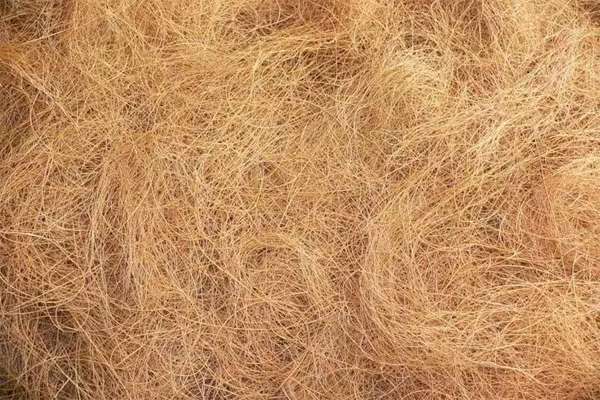
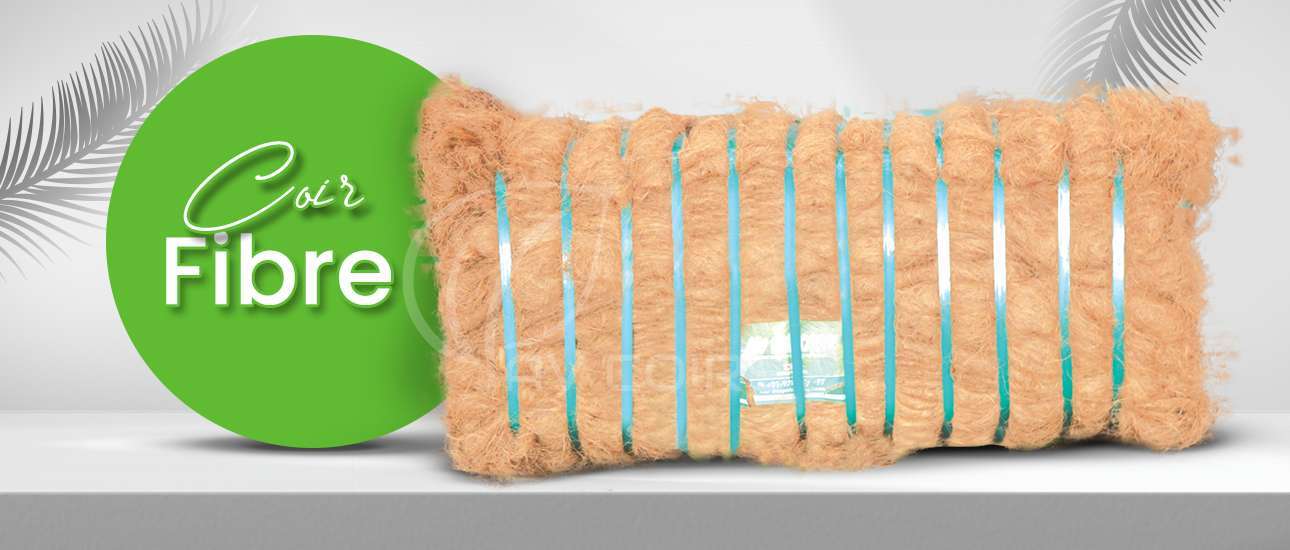
Coir fibre (also called coconut fibre) is the coarse, natural fibre extracted from the outer husk of the coconut. It sits between the coconut’s hard shell and outer skin, and is separated through a retting and mechanical extraction process before being cleaned, dried, and graded for industrial and commercial use.
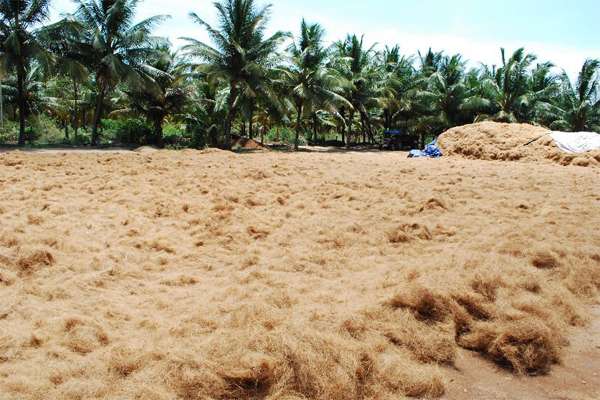
Every coconut husk that reaches our facility in Pollachi goes through the same discipline: proper retting, clean separation, careful drying, and honest grading. That’s the whole philosophy behind AV Coirs’ coir fibre — no shortcuts, no filler, just fibre that performs the way rope makers, mattress units, and geotextile manufacturers actually need it to.
We’re not a trading outfit reselling someone else’s stock. Every bale that leaves our unit was processed on-site, which means we can vouch for what’s inside it. Pollachi has been a coir-processing hub for generations, sitting close to some of Tamil Nadu’s densest coconut cultivation, so the husk we work with hasn’t travelled far or lost quality before reaching our floor.
Grading isn’t left entirely to machines — fibre length, colour, and tensile strength are checked by hand before baling, catching inconsistent batches before they ship. Our coir fibre goes into rope manufacturing, industrial brushes, mattress padding, geotextiles, and horticultural mulch, all fully natural, biodegradable, and free of synthetic treatment.
Applications
- Rope making and fishing nets
- Carpet and mat manufacturing
- Mattress and cushion production
- Brush and broom manufacturing
- Needle felt products
- Coir-based wood and composite products
- Geotextiles for erosion control and road works
Two Fibres, Two Very Different Jobs
Not all coir fibre behaves the same way, and treating it like a single commodity is where a lot of buyers get burned.
Brown Coir Fibre
Brown fibre comes from coconuts that were left to mature fully. It’s tougher, coarser, and holds up under mechanical stress, which is why it ends up in brushes, doormats, brooms, and upholstery filling.
White Coir Fibre
White fibre is pulled from younger, unripe husks. It’s softer and more pliable, which makes it the better choice for rope, twine, and net-making, where flexibility matters more than raw toughness.
Choosing the Right Coir Fibre Grade for Your Product
A question we get from almost every first-time buyer: “Which grade do I actually need?” It’s a fair question, because coir fibre isn’t interchangeable across applications the way some raw materials are.
If you’re manufacturing rope, twine, or fishing nets, white coir fibre’s flexibility is going to serve you better than brown. If you’re making brushes, doormats, or upholstery filling, brown coir fibre’s toughness is what holds up under repeated mechanical stress. For geotextiles and erosion-control matting, a blend of both is often the better call — strength from brown, pliability from white.
If you’re unsure, tell us the end product and expected usage conditions, and we’ll recommend the grade rather than leave you to guess.
Coir Fibre's Companion Material: Coco Peat
Coir fibre doesn’t come out of a husk alone — it comes bundled with coco peat (also called coir pith), the fine, spongy material that binds the fibre strands together inside the husk. We process both from the same raw material stream, which is part of why our fibre grading is as consistent as it is: nothing is a rushed by-product of chasing peat yield, or vice versa.
If your business also uses a growing medium alongside fibre-based products, our coco peat coin and coir pith range is processed at the same facility, from the same husk source.
A More Sustainable Alternative to Synthetic Fibre
Long before eco-friendly became a buzzword, coir fibre was already doing the job — a fully natural, biodegradable material that used to be discarded as husk waste before industries realised what it could do. Every bale we produce carries that same natural profile: no synthetic blending, no chemical treatment, fully compostable at end of life.
For manufacturers looking to move away from synthetic or plastic-based fibre in rope, matting, or padding applications, coir fibre offers a like-for-like performance swap without the environmental cost — which is increasingly what export buyers in the EU and North America are specifically asking for.
Explore Our Related Coir Products
- Coco Peat / Coir Pith — the growing medium extracted alongside fibre
- Coir Mulch Mat — for erosion control and horticultural ground cover
- Curled Coir Rope and Two Ply Yarn Coir Rope — finished rope products made from our own white fibre
- Bristle Fibre – Brown and Bristle Fibre – Black — processed specifically for brush and broom manufacturing
- Grow Bags — for commercial horticulture using coir-based substrate
FAQs
Coir fibre is used to manufacture ropes, mats, brushes, mattresses, upholstery padding, and geotextiles for soil erosion control.
Brown coir comes from mature coconuts and is coarser and stronger. White coir comes from tender coconuts and is finer, used mainly for rope and twine.
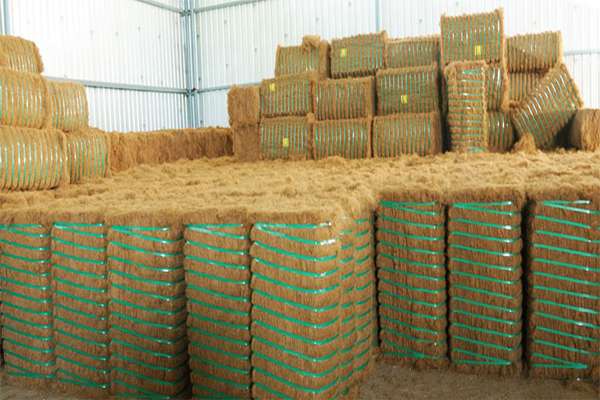
Yes. AV Coirs manufactures and supplies coir fibre in compressed-bale packaging suitable for both domestic distribution and international export.
Yes, coir fibre is 100% natural and fully biodegradable, making it a sustainable alternative to synthetic fibres.