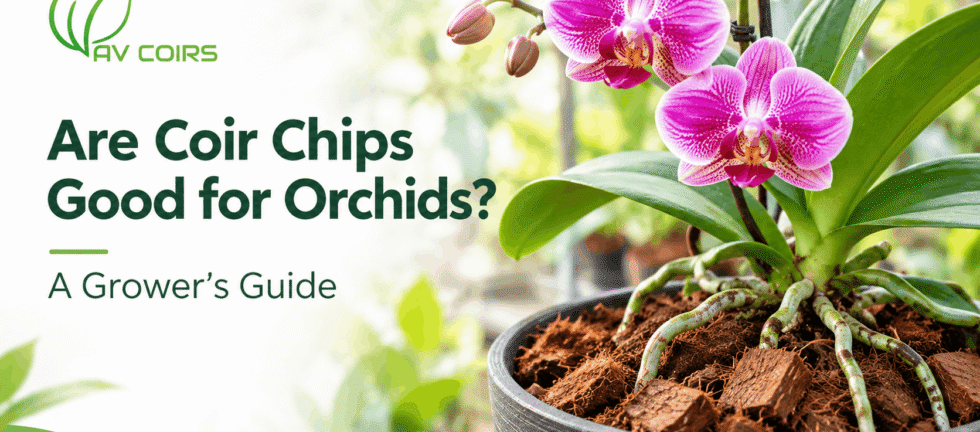
Yes, coir chips are a good growing medium for orchids. Their chunky, airy structure lets roots breathe, while the dense, lignin-rich husk holds moisture and nutrients in balance and keeps its shape far longer than bark. That is the short answer.
Anyone who has grown orchids in bark knows the pattern. It looks great for about six months, then can turn into a soggy layer that stops roots from breathing. This guide explains what coir chips are, how they compare with pine bark, whether they need washing, and how to use them well. It comes from the AV Coirs team in Pollachi, Coimbatore, close to the coconut-growing regions that supply our husks.
What Are Coir Chips?
Coir chips are pieces of coconut husk that are chipped and graded for use as a growing medium. You may also see them sold as coco chips, coconut husk chips or coco chunks. The names differ, but the product is the same.
Instead of grinding the husk into fibre or pressing it into peat, the husk is broken into irregular pieces. That uneven shape gives the airy texture of orchid roots like. The raw material comes from coconut-producing regions near Pollachi and Coimbatore, an area known for coir products. You can see our full range on the coir chips manufacturer page.
The material is renewable and biodegradable. The Food and Agriculture Organization notes that using renewable agricultural by-products helps support sustainable farming, and coconut husk fits that description well.
Why Coir Chips Work Well for Orchids
Orchids that grow on trees, known as epiphytic orchids, need roots that get plenty of air without ever drying out completely. Here is how the chips help:
- Durable structure. The husk is dense and rich in lignin, so it takes much longer to compact. That means less frequent repotting.
- High CEC. Cation exchange capacity (CEC) describes how well a medium holds nutrients. The chips hold nutrient ions and release them slowly to the roots instead of letting them wash straight through.
- Balanced moisture and aeration. Air pockets form between the irregular chips, while the fibre still absorbs some water.
- Lower fertilizer wastage. Because nutrients are retained, growers can expect to fertilize less than before.
- Less transplant shock. Roots anchor well, and the chips do not pack tightly around the root ball the way soil does.
- Sustainable. Coconut husk is a by-product of coconut processing.
Put simply, the chips give roots plenty of air while still holding enough moisture to keep them from drying out completely.
Coir Chips vs Bark for Orchids: Which Lasts Longer?
Coir chips last longer than bark and hold nutrients better. Bark costs less at first, but it breaks down sooner.
| Factor | Coir chips | Pine bark |
| Structure over time | Stays open for much longer | Can turn soggy after about six months |
| Aeration | High, from the chunky, irregular shape | High at first, then drops as it breaks down |
| Water retention | Moderate to high | Low |
| Nutrient holding (CEC) | High | Low |
| Upfront cost | Slightly higher | Lower |
| Best for | Orchids, anthuriums, aroids, mixed media | Orchids (short-term growers) |
The one real drawback is price, since the chips cost slightly more upfront than bark. Many orchid growers accept that because they repot less often.
If you are also comparing the finer husk material, read our guide on coco chips vs coco peat.
Do Coir Chips Need Washing Before Use?
Well-processed chips need no extra treatment. Unwashed or unbuffered ones should be soaked and rinsed before potting.
Raw husk naturally holds potassium and sodium salts and tannins. A good manufacturer washes these out over several cycles, which brings the electrical conductivity (EC) down to a safe range for roots. Skip that step and the chips can look perfect on delivery yet scorch roots within weeks. This is the stage some suppliers rush.
If your chips arrive pressed into a block, they also need soaking and breaking up. Our step by step guide on how to prepare coco chips brick walks you through it.
Best Ways to Use Coir Chips
The chips are sieved into small, medium and large grades, so you can match the grade to your plant and pot.
- Orchids and anthuriums. This is where the chips are most established, because these plants want air at the roots without staying bone dry.
- Aroids. Monstera and Philodendron do well in the same open structure, often with perlite or bark added for an even chunkier mix.
- Semi-hydro and hydroponics. The stable structure and high CEC suit setups where you control nutrients directly.
- Mulch. Coarser grades suppress weeds and break down slowly.
- Blends with cocopeat. Many growers mix the chips with cocopeat to balance airiness against water retention.
One honest limit: the chips are not ideal for seed starting or delicate seedlings. The chip size makes it hard for seeds to touch the medium properly, so finer cocopeat works better there.
How Do You Choose a Reliable Coir Chips Manufacturer?
Good chips begin with good processing. When you compare suppliers, check these points:
- Washing and buffering built into the process, not sold as a premium extra
- Consistent grading, so a reorder matches the last batch
- Bulk and export capability, with direct factory pricing instead of a middleman
- Direct contact with the manufacturer for custom grading or packaging
AV Coirs manufactures and exports from Pollachi, Coimbatore, and offers all of these. If you need coir chips in bulk, see our product page or contact our team for a quote.
FAQs
Are coir chips good for orchids?
Yes. They let air reach orchid roots while still holding some moisture and nutrients, and they keep their structure far longer than bark. The one condition is quality: choose washed and buffered chips so salts and tannins do not harm the roots.
Are coir chips and coco chips the same?
Yes. Coir chips, coco chips, coconut husk chips and coco chunks are different names for the same product: pieces of coconut husk that are chipped and graded for use as a growing medium. The name changes, the material does not.
How long do the chips last compared with bark?
Bark can look good for about six months before turning soggy and blocking airflow. The chips are dense and rich in lignin, so they stay open for much longer. Exact lifespan depends on watering habits and pot conditions. Bark is cheaper upfront, but the chips usually mean fewer repotting sessions.
Do the chips need soaking before potting?
Properly washed and buffered chips need no extra treatment. If a batch is unwashed or unbuffered, soak and rinse it before potting to flush out salts and tannins. Ask your supplier how the chips were processed, since this affects root health.
Can I mix the chips with cocopeat or perlite?
Yes. Many growers blend the chips with cocopeat to balance airiness against water retention. For orchids and aroids, perlite or bark can be added for an even chunkier mix. AV Coirs supplies chips and cocopeat separately, so you can set your own blend.
Conclusion
So, are coir chips good for orchids? For most growers, yes. They offer lasting structure, balanced moisture and aeration, and steady nutrient holding. They ask for just one thing in return: proper washing and buffering. If you want graded, factory direct supply for your nursery, shop or export order, visit the AV Coirs product page and request a quote. Healthy roots start with the right medium.